

Ceramic braces and metal braces move teeth the same way and get to the same result. The difference is what they are made of, how visible they are, and how much care they need along the way. Metal brackets are stainless steel and hold up to almost anything. Ceramic brackets are tooth-colored and blend into your smile, which is why most adults ask about them first.
Dr. Kurt Kavanaugh and Dr. Zaara Baig work with every patient to build a plan that fits both the clinical picture and how they want to feel while wearing it. Here is how the two compare and how to tell which one suits you.
What Are Metal Braces?
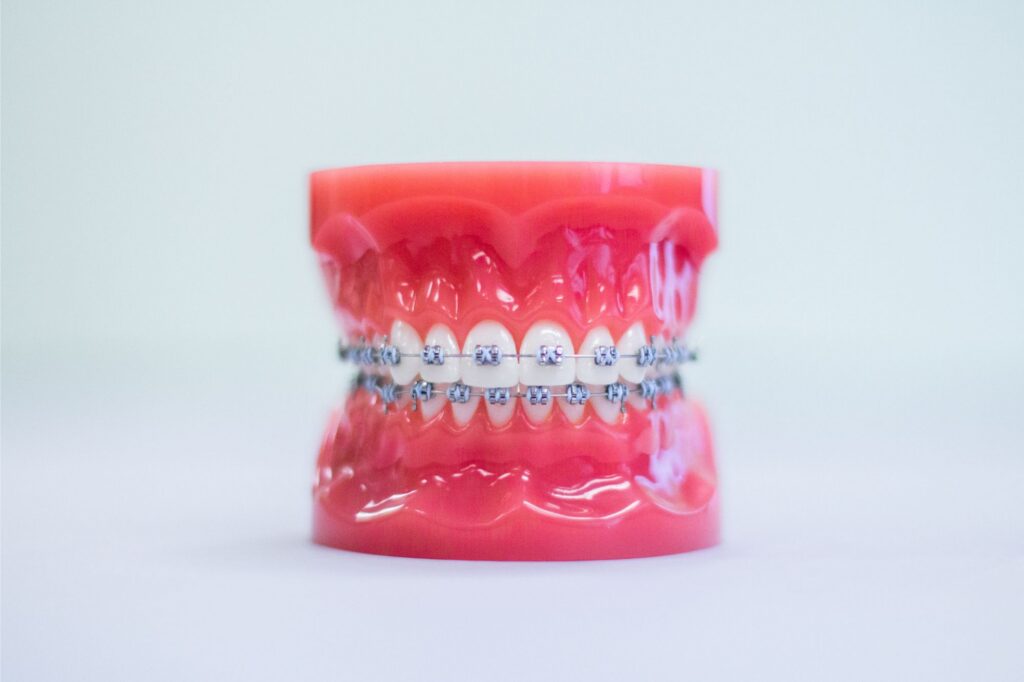
Metal braces are the ones most people picture. Stainless steel brackets bond to each tooth, an archwire connects them, and steady pressure moves everything into position over time. They handle every case type, from mild crowding to complex bite correction.
Today’s brackets are nothing like the ones from twenty years ago. They are smaller, rounder, and sit closer to the tooth, so they are far more comfortable than their reputation suggests. If you want the full breakdown, our metal braces page covers how the components work together.
What Are Ceramic Braces?
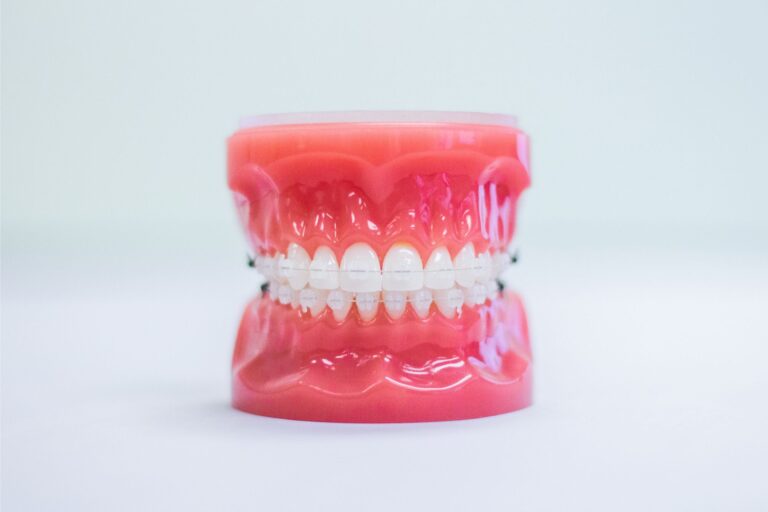
Ceramic braces work on exactly the same principle. The difference is the bracket material. Instead of steel, the brackets are made from a translucent ceramic that picks up the shade of your natural tooth, which makes them much harder to spot from a conversational distance.
Patients often tell us ceramic feels a little smoother against the inside of the lip, since the material is less abrasive than metal. Our clear braces page goes into the material and who tends to choose it.
Ceramic Braces vs Metal Braces at a Glance
| Feature | Metal Braces | Ceramic Braces |
|---|---|---|
| Bracket material | Stainless steel | Tooth-colored ceramic |
| Visibility | Noticeable | Blends with the tooth |
| Durability | Very high, rarely breaks | Good, more prone to chipping |
| Staining risk | Brackets do not stain | Ties can discolor between visits |
| Case complexity | All case types | All case types |
| Best suited to | Younger patients, contact sports, complex movement | Adults and older teens who want a subtler look |
How to Choose Between Them
Both options finish the job. The right answer depends on your case, your age, and how much the look of your braces matters to you day to day.
When Metal Braces Make More Sense
- Your case involves significant rotation, spacing, or bite correction
- You are a younger patient still growing into your adult teeth
- You play contact sports or are generally hard on your equipment
- You want the option to change elastic colors at every visit
When Ceramic Braces Make More Sense
- You are an adult or older teen and visibility is your main hesitation
- Your job or your day to day puts you in front of people constantly
- You are consistent with brushing and comfortable with a little extra upkeep
- Your case does not need the heaviest mechanics to correct
During a free consultation, Dr. Kavanaugh or Dr. Baig will look at your scans and tell you plainly whether both options are on the table for your case or whether one is the better clinical fit. Sometimes the decision makes itself.
Caring for Ceramic Braces
This is the part people usually do not hear about until they are already in treatment. The ceramic brackets themselves resist staining well. The clear elastic ties that hold the archwire in place are a different story, and coffee, tea, red sauce, and curry will all show on them.
The ties get swapped at every adjustment visit, so any discoloration is temporary. Staying on top of brushing keeps things looking clean in between, and our guide to the best toothbrush for braces covers what actually gets into the spots around brackets.
What About Clear Aligners?
Plenty of patients weighing ceramic against metal are really asking a broader question about how visible their treatment has to be. Clear aligners are the third option, using a series of removable trays instead of fixed brackets. They suit some cases beautifully and are not the right tool for others.
If you are somewhere between all three, bring that up at your first visit. It is a common place to land and an easy one to sort out once someone has looked at your teeth.
Frequently Asked Questions
Do ceramic braces stain?
The ceramic brackets themselves hold their color well. The clear elastic ties around them can pick up staining from coffee, tea, and strongly colored foods, but those get replaced at every adjustment visit, so it never lasts long.
Are ceramic braces as effective as metal braces?
Yes. Both use the same brackets-and-archwire mechanics and both correct the full range of alignment and bite conditions. The material changes how the braces look and how they hold up, not whether they work.
Do ceramic braces take longer than metal braces?
For most cases the timeline is comparable. Where ceramic can add time is on cases needing heavy tooth movement, or if a bracket chips and needs replacing mid-treatment. Dr. Kavanaugh or Dr. Baig will give you a realistic estimate for your specific case.
Can kids get ceramic braces?
Usually we steer younger patients toward metal. Ceramic is more prone to chipping, and kids tend to be harder on their braces between visits. Older teens and adults are the more typical candidates.
Are ceramic braces more comfortable than metal?
Some patients find the ceramic surface slightly smoother against the inside of the lip. The difference is modest, and both types cause some tenderness for a few days after placement and after adjustments.
Ready to Decide?
The honest answer is that both options will get you a straight smile, and the better choice is the one that fits your case and your life. We fit both at our Kansas City and Sedalia offices, and we are happy to walk you through either one.
Have a look at our full range of braces in Kansas City, or give us a call to get started. Reach our Kansas City office at 816-420-8100 or our Sedalia office at 660-829-2900.